Data
Official data in SubjectManager for the following academic year: 2026-2027
Course director
-
Dr. Kovács-Rozmer Katalin
,
Department of Pharmaceutical Chemistry -
Number of hours/semester
lectures: 0 hours
practices: 42 hours
seminars: 0 hours
total of: 42 hours
Subject data
- Code of subject: OPA-L2G-T
- 3 kredit
- Pharmacy
- Natural and Social Sciences modul
- autumn semester
OPA-L1E-T finished
Course headcount limitations
min. 1 – max. 999
Topic
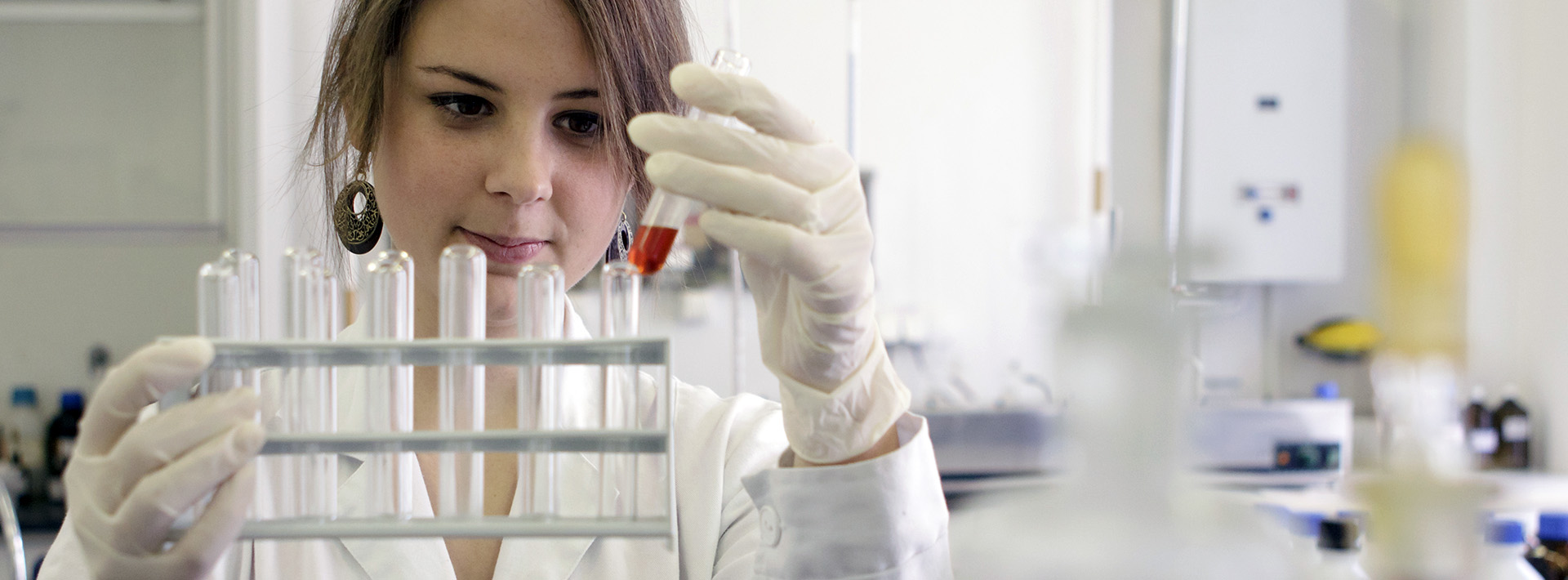
During the practical sessions, the student – relying on the theoretical material of the lectures – will master the basics of volumetric analysis, as well as the most important types of determinations based on ion association and redox equilibria (acid-base, precipitation, chelatometric, redox). A key goal is to practice careful, accurate and quantitative analytical work, with particular attention to resource efficiency, minimizing chemical waste and environmentally conscious laboratory practices. It is essential that the student thoroughly familiarize himself with the reactions, procedures, rules of quantitative chemical analysis, and the calculation of measurement results. During the training, we also place great emphasis on the safe handling of hazardous substances and the protection of water resources.
Lectures
Practices
- 1. Laboratory safety and accident protection. Calibration of glassware.
- 2. Laboratory safety and accident protection. Calibration of glassware.
- 3. Laboratory safety and accident protection. Calibration of glassware.
- 4. Calibration of glassware.
- 5. Calibration of glassware.
- 6. Calibration of glassware.
- 7. Standardization of 0.1 M hydrochloric acid solution.
- 8. Standardization of 0.1 M hydrochloric acid solution.
- 9. Standardization of 0.1 M hydrochloric acid solution.
- 10.
Determination of boric acid and borax (sodium tetraborate)
- 11.
Determination of boric acid and borax (sodium tetraborate)
- 12.
Determination of boric acid and borax (sodium tetraborate)
- 13.
Parallel determination of sodium hydroxide and sodium carbonate
- 14.
Parallel determination of sodium hydroxide and sodium carbonate
- 15.
Parallel determination of sodium hydroxide and sodium carbonate
- 16.
Determination of acetic acid. Determination of acetate ions under non-aqueous conditions.
- 17.
Determination of acetic acid. Determination of acetate ions under non-aqueous conditions.
- 18.
Determination of acetic acid. Determination of acetate ions under non-aqueous conditions.
- 19.
Determination of chloride ions by Mohr's method.
- 20.
Determination of chloride ions by Mohr's method.
- 21.
Determination of chloride ions by Mohr's method.
- 22.
Determination of bromide ions by Volhard's method.
- 23.
Determination of bromide ions by Volhard's method.
- 24.
Determination of bromide ions by Volhard's method.
- 25.
Complexometric determination of nickel (II) ions. Determination of aluminum ions by indirect titration.
- 26.
Complexometric determination of nickel (II) ions. Determination of aluminum ions by indirect titration.
- 27.
Complexometric determination of nickel (II) ions. Determination of aluminum ions by indirect titration.
- 28.
Complexometric determination of mercury (II) and zinc ions near each other.
- 29.
Complexometric determination of mercury (II) and zinc ions near each other.
- 30.
Complexometric determination of mercury (II) and zinc ions near each other.
- 31.
Standardization of 0.02 M potassium permanganate solution. Permanganometric determination of hydrogen peroxide
- 32.
Standardization of 0.02 M potassium permanganate solution. Permanganometric determination of hydrogen peroxide
- 33.
Standardization of 0.02 M potassium permanganate solution. Permanganometric determination of hydrogen peroxide
- 34.
Standardization of 0.01 M sodium thiosulfate measuring solution. Determination of copper (II) ions.
- 35.
Standardization of 0.01 M sodium thiosulfate measuring solution. Determination of copper (II) ions.
- 36.
Standardization of 0.01 M sodium thiosulfate measuring solution. Determination of copper (II) ions.
- 37.
Determination of active chlorine content of Neomagnol tablets
- 38.
Determination of active chlorine content of Neomagnol tablets
- 39.
Determination of active chlorine content of Neomagnol tablets
- 40.
Bromatometric determination of ascorbic acid
- 41.
Bromatometric determination of ascorbic acid
- 42.
Bromatometric determination of ascorbic acid
Seminars
Reading material
Obligatory literature
Harris D.C.: Quantitative Chemical Analysis, 8th ed., W.H. Freeman and Co., New York, 2010.
Literature developed by the Department
Laboratory handouts - describing details of the experiments.
Notes
Recommended literature
Conditions for acceptance of the semester
Participation in the practices of the course is obligatory. Maximum 3 absences are allowed.
At least 75% of the quantitative determinations should be at least satisfactory. Students write at least four mini-tests on the practices. The average of their results must be at least 50%.
Mid-term exams
At least 75% of the quantitative determinations should be at least satisfactory. Students write at least four mini-tests on the practices. The average of their results must be at least 50%. The practical work (results of the written tests and the experimental work) is evaluated by a practical grade. Satisfactory (2) evaluation is the minimum requirement of acknowledgment of the semester.
Making up for missed classes
There is no opportunity to make up missed classes (lectures and practices).
Exam topics/questions
N/A
Examiners
Instructor / tutor of practices and seminars
- Harmath Lilla Édua
- Kovács-Rozmer Katalin
- KURZUSHOZ RENDELT OKTATÓ