Data
Official data in SubjectManager for the following academic year: 2025-2026
Course director
-
Horváth Györgyi
associate professor,
Department of Pharmacognosy -
Number of hours/semester
lectures: 0 hours
practices: 28 hours
seminars: 0 hours
total of: 28 hours
Subject data
- Code of subject: OPG-O2G_23-T
- 2 kredit
- Pharmacy
- Pharmaceutical Science and Pharmacy modul
- spring
OPG-O1E-T finished
Course headcount limitations
min. 5 – max. 50
Topic
Pharmacognosy covers general aspects of medicinal plants (such as industrial applications, research, cultivation and cultivars, gene technology, critical evaluation of holistic medicine and homeopathy, possibilities of phytotherapy) and discusses the chemical composition and other qualitative characteristics, as well as the most important areas of usage and pharmacology of herbal drugs and drug fractions such as oils and essential oils. Based on their previous pharmacobotanic knowledge students become acquainted with medicinal plants and drugs that are used in pharmacotherapy (especially in phytotherapy) both in Hungary and abroad. Students are required to recognize the most important tea drugs and drugs with strong physiological effect that are traded and/or imported in Hungary. In the frame of practices students obtain experience in drug analysis and identification methods and the ability to solve daily arising problems, with special emphasis on gathering information from literature, databases and the internet.
Course objective and role in the curriculum: students should become familiar with the general, phytochemical and pharmacological features of drugs applied in pharmaco- and phythotherapy.
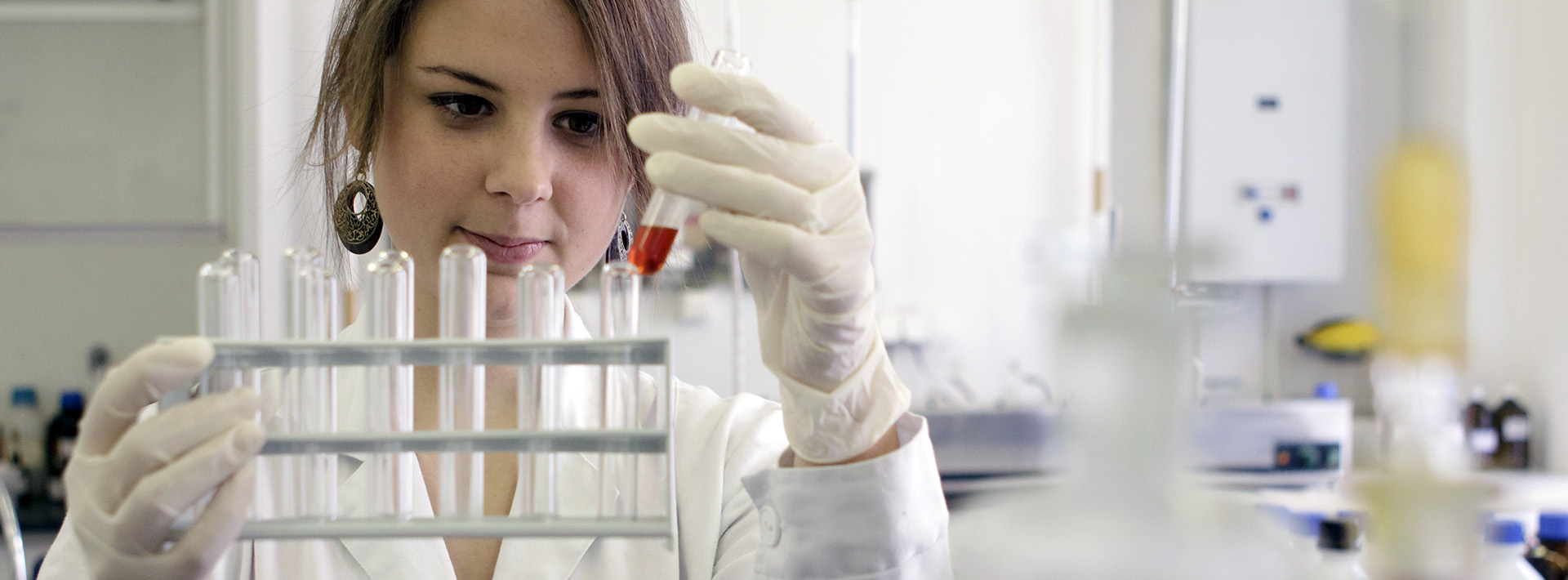
In the European Pharmacopoeia (Ph. Eur.) we can find descriptions of the chemical reactions for identification of plant secondary metabolites. Practising pharmacists have to know these basic examinations. In the pharmacognosy practices, the students perform these examinations themselves.
Lectures
Practices
- 1.
Drugs containing alkaloids.
- 2.
Drugs containing alkaloids.
- 3.
Drugs containing alkaloids.
- 4.
Drugs containing alkaloids.
- 5.
Written test (alkaloids). Drugs containing tannins.
- 6.
Written test (alkaloids). Drugs containing tannins.
- 7.
Written test (alkaloids). Drugs containing tannins.
- 8.
Written test (alkaloids). Drugs containing tannins.
- 9.
Written test (tannins). Drugs containing flavonoids.
- 10.
Written test (tannins). Drugs containing flavonoids.
- 11.
Written test (tannins). Drugs containing flavonoids.
- 12.
Written test (tannins). Drugs containing flavonoids.
- 13.
Drug identification test 3. (written; alkaloids, tannins, and flavonoids). Written test (flavonoids). Drugs containing anthraquinones, and coumarins.
- 14.
Drug identification test 3. (written; alkaloids, tannins, and flavonoids). Written test (flavonoids). Drugs containing anthraquinones, and coumarins.
- 15.
Drug identification test 3. (written; alkaloids, tannins, and flavonoids). Written test (flavonoids). Drugs containing anthraquinones, and coumarins.
- 16.
Drug identification test 3. (written; alkaloids, tannins, and flavonoids). Written test (flavonoids). Drugs containing anthraquinones, and coumarins.
- 17.
Written test (antranoids). Other drugs containing therapeutically important active compounds.
- 18.
Written test (antranoids). Other drugs containing therapeutically important active compounds.
- 19.
Written test (antranoids). Other drugs containing therapeutically important active compounds.
- 20.
Written test (antranoids). Other drugs containing therapeutically important active compounds.
- 21.
Drug identification test 4. (oral!; anthranoids, coumarins, others)
- 22.
Drug identification test 4. (oral!; anthranoids, coumarins, others)
- 23.
Drug identification test 4. (oral!; anthranoids, coumarins, others)
- 24.
Drug identification test 4. (oral!; anthranoids, coumarins, others)
- 25.
Tea mixtures. Case studies, counseling during pharmacy work. Situational tasks (student’s homework).
- 26.
Tea mixtures. Case studies, counseling during pharmacy work. Situational tasks (student’s homework).
- 27.
Tea mixtures. Case studies, counseling during pharmacy work. Situational tasks (student’s homework).
- 28.
Tea mixtures. Case studies, counseling during pharmacy work. Situational tasks (student’s homework).
Seminars
Reading material
Obligatory literature
Literature developed by the Department
Bencsik T, Ács K, Farkas Á, Molnár P, Papp N, Horváth Gy: Pharmacobotanical and phytochemical investigations of herbal drugs, teaching supplement, 2015
Notes
Recommended literature
Conditions for acceptance of the semester
Participation is compulsory on the laboratory practices.
Mid-term exams
There is no possibility to take oral exam if somebody receives failed practice result. Oral exam incudes the practice result. Preparation of practice nootebook is compulsory. Every week, students need to write written exams. During semester, they need to prepare one written assay. Practice results includes: written exams, written assay, notebook.
Making up for missed classes
There is possibility to make up for the missed practices but with the course supervisor's permission.
Exam topics/questions
Not relevant.
Examiners
Instructor / tutor of practices and seminars
- Balázs Viktória Lilla
- Bencsik Tímea
- Csikós Eszter
- KURZUSHOZ RENDELT OKTATÓ