
The faculty leaderships at the Medical School and Faculty of Pharmacy supports medical and pharmacy students taking part in TDK research starting in the spring semester of the 2021-2022 academic year, hoping to promote a higher number of PhD qualifications. Students showing excellent results in TDK work are eligible to apply in the last two years of their gradual training. Applications will open in January.
written by Rita Schweier
Vice-dean for general affairs and postgraduate education, professor Dr. Ertl Tibor, has played a large role in establishing this support.
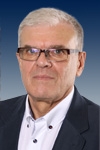
- I have gained experience abroad that in some institutions handle medical and PhD education in parallel. At the University of Iowa, the curriculum was designed in a way that meant students got their MD and PhD qualifications at the same time at graduation. This cannot be managed in the usual four years, but over a longer period – but the courses happen in parallel. Sometimes the medical ones are more prevalent, sometimes the focus is on the PhD part of the training. We started thinking about using the excellent results and work of our TDK students in a way that can be converted into a PhD training two years ago. This would allow us to shorten the duration of the four year PhD program.
- Why is this relevant now?
- Discussions sped up about this topic because the employment structure of residents changed, resulting in a huge difference in financial possibilities between residents and PhD students – in favour of residents. This narrows down the number of doctors willing to be full-time PhD students, but we have a prominent need for them, since the faculty leadership would like to create the future generation of educators, researchers and clinicians from the pool of PhD graduate educators and medical experts. What could also happen is that full-time residents could be full-time PhD students at the same time, but we know this is almost impossible since both of these position require the full attention of a person – this solution is not supported by the National Hospital Directory either. Fifth- and sixth year students can, however, complete scientific work in the form of publications, serving as the base of a PhD course. Other universities already do this in the country.
Professor Dr. Júlia Szekeres, chair of the Doctoral and Habilitation Council estimates the number of applicants for the Dean’s scholarship to about ten people.
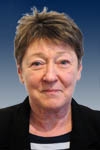
- Even though the number of applicants is not limited, I think that – based on the example from Budapest – there will be a maximum of ten students who hand in their applications, since we require years of TDK activities and scientific achievements, all counting towards the PhD dissertation.
- In which year should students apply?
- The sooner the better. Since this program is only starting now, there might be students who are only reached in their sixth year. We do not want them to miss out, since by that time they can gather enough research material to make them eligible to apply. Ideally, fifth year students would apply, and then they would have two years to fulfil the requirements.
- Which are strict.
- Yes, but they are not impossible. The application has to contain the recommendation of the thesis consultant – since they know the applicant, they will be able to evaluate whether the applicant will be able to fulfil the requirements on time. It also has to contain the already existing research results of the student, their TDK or other scientific conference presentations, any published results; basically, the summary of their scientific achievements. Taking part in PhD courses and research, they have to attain the credits for the first two years of the PhD training. After this, they will be able to take the complex exam at the same time as graduating from the medical course. If they succeed, graduates will be able to start the second two years of the PhD training: this basically means that the length of the PhD training will be shortened to two years.
- The 140 thousand forint monthly stipend is also a huge help for this.
- This is indeed a nice sum. This is the same stipend PhD students receive in the first two years of their studies; in the following they receive 180 thousand. A PhD is a requirement of academic advancement; it necessary for becoming an associate professor. However, it does not matter in healthcare employment – only age matters there. There is a jump in salary after the attainment of the certification exam, and then the salary keeps increasing with time – but there are no extra requirements for this. However, there are people who want to go abroad; in this case, having a PhD does matter.
- It has a prestige value.
- Yes, therefore I think we will have applicants, and I trust that most of them will stay in the theoretical departments. This is, by the way, a win-win situation. Medical degree PhD holders are good for the departments, and for the students as well, since their careers will speed up. After graduation, there are multiple options for new doctors: they can continue on to the scholarship PhD training, finishing it in two years, or they can start their residency, completing their PhD as correspondence students.
- Applications can be handed in at the beginning of next year?
- Yes, we will accept applications in January, since the second semester will start in February, along with the PhD training. All important information about this is available for students on the website of the Doctoral and Habilitation Office.
Professor Dr. Erika Pintér, chair of the Undergraduate Research Society, has studied how other universities handle PhD qualifications for long months, in close collaboration with Dr. Júlia Szekeres. Semmelweis University has had a similar program with 10-15 students since 2018, their experience has also helped them achieve the Pécs vision.

- How many TDK students are there at the faculty right now?
- We have over 250 registered TDK students, which is a high number. However, only about a hundred of them are actually active. They are the ones who can write a presentation and then present it at a TDK conference.
- Do you think that this smaller circle will be interested in the Dean’s scholarship?
- Definitely, since I have already talked to those fourth- fifth- and sixth year students who are seriously interested in science. Those fourth and fifth year students who started their TDK work in time find the Dean’s scholarship a great opportunity, and sixth years are sorry that the option is only available from next February. Those who are dedicated to their research and consult with their thesis consultant often are the best candidates. Applicants have to show serious dedication, they have to agree to the requirements outline in the tender. Therefore we do not count on mass applications. If there are eight or ten, we will already count that as a win, since we will not lose our best students. Including them in education during their studies is a huge advantage, for example in the Anatomy Department, where the demonstrator system works really well. This can also mean extra income for them, which, together with the scholarship can be compatible with a beginner resident’s salary.
- Aside from the excellence, willingness and dedication of students, your own motivating role is also very important.
- Undoubtedly. If a department continues internationally acclaimed research and their young employees – associate professors, assistant professors, scientific colleagues – are dedicated to teach young people, huge achievements can be reached, because students want to learn; this is my experience after one and a half years and chair of the Undergraduate Research Society. my biggest fear is also that the positions for young people at the departments will empty out, because doctors and pharmacists are all oriented towards practical medicine. There are excellent biologists and chemist, but there are disciplines – like pharmacology – that can only be taught with a degree in medicine or pharmacy. I hope that we will have a small group that will have a need for scientific work and become internationally competent. I hope they will be able to take part in conferences and forums, and publish in acclaimed journals. Their existence and presence would be a great driving force for Hungarian science, and last but not least for the education level at the University of Pécs Medical School.