Daten
Offizielle Daten in der Fachveröffentlichung für das folgende akademische Jahr: 2026-2027
Lehrbeauftragte/r
-
Bugyi Beáta
professor,
Department of Medical Biology -
Semesterwochenstunden
Vorlesungen: 42
Praktika: 12
Seminare: 30
Insgesamt: 84
Fachangaben
- Kode des Kurses: OAA-MB1-T
- 6 kredit
- General Medicine
- Basic modul
- autumn semester
keine
Zahl der Kursteilnehmer für den Kurs:
min. 1 – max. 999
Thematik
Molecular cell biology aims to introduce the molecular mechanisms of molecular biology and cell biology and to emphasise their importance in medicine. It provides the basis for teaching the different areas of molecular medicine, molecular pathology, molecular diagnostics, pharmacology and gene therapy. The first semester of the course will introduce the molecular biology methods used today, the structure and function of cellular components, the regulation of the cell cycle, the mechanisms of DNA replication and the expression of gene expression.
Course-related information is published in the Student Guide.
Vorlesungen
- 1. Introduction to molecular cell biology - Bugyi Beáta
- 2. Comparison of prokaryotic and eukaryotic cells - Bugyi Beáta
- 3. Macromolecules 1. Nucleic acids - Bugyi Beáta
- 4. Macromolecules 2. Proteins - Bugyi Beáta
- 5. Microscopy 1. Light microscopy - Bugyi Beáta
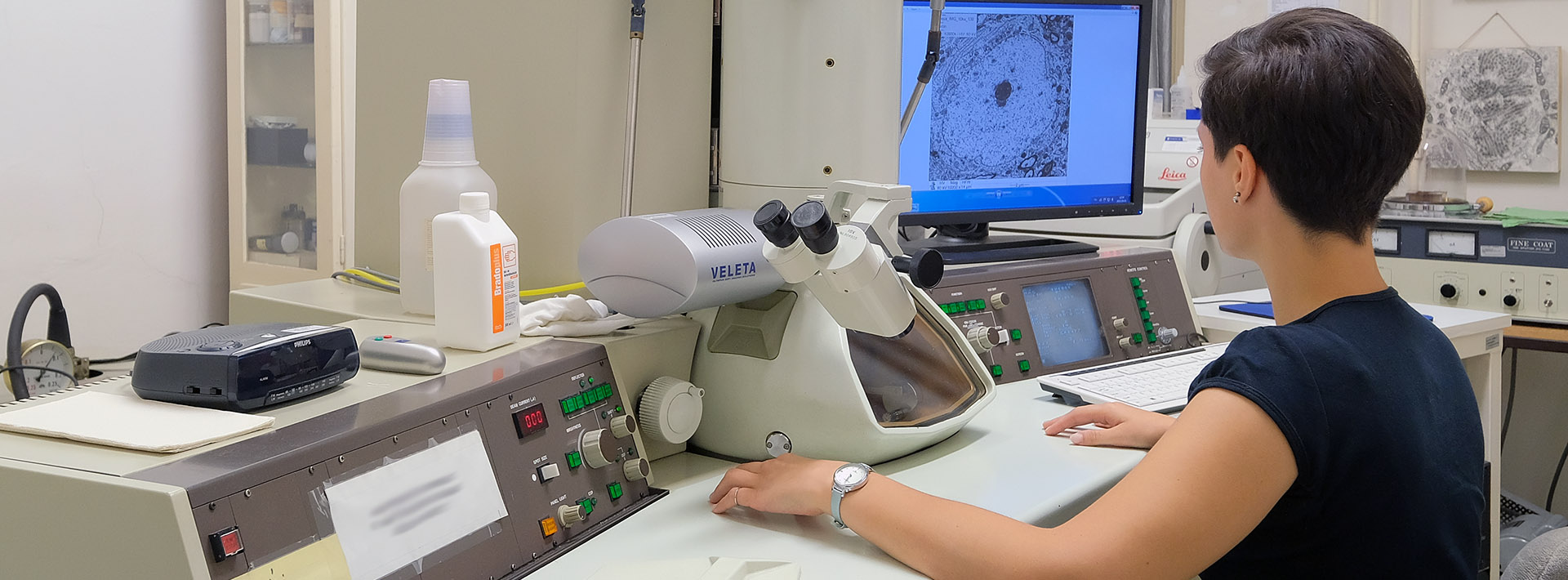
- 6. Microscopy 2. Electronmicroscopy - Bugyi Beáta
- 7. Molecular biology methods 1. Restriction endonucleases - Sétáló György ifj.
- 8. Molecular biology methods 2. DNA cloning. Genomic libraries - Sétáló György ifj.
- 9. Molecular biology methods 3. Polymerase chain reaction - Berta Gergely
- 10. Molecular biology methods 4. DNA sequencing: Sanger-sequencing, DNA-chip - Varga Judit
- 11. Molecular biology methods 5. DNA sequencing: New generation sequencing - Varga Judit
- 12. Molecular biology methods 6. Analysis of gene expression - Varga Judit
- 13. Molecular biology methods 7. Transgenic organisms - Bátor Judit
- 14. Molecular biology methods 8. Inhibition of gene expression - Varga Judit
- 15. Molecular biology methods 9. Immunologioal methods - Csabai-Tanics Tímea Judith
- 16. The cell nucleus - Feketéné Kiss Katalin
- 17. Genome organization - Feketéné Kiss Katalin
- 18. The structure and chemical composition of chromatin - Feketéné Kiss Katalin
- 19. Phases of the cell cycle - Sétáló György ifj.
- 20. Regulation of the cell cycle - Sétáló György ifj.
- 21. Cell division. Mitosis, meiosis - Sétáló György ifj.
- 22. DNA replication in prokaryotes - Sétáló György ifj.
- 23. DNA replication in eukaryotes - Sétáló György ifj.
- 24. DNA repair - Sétáló György ifj.
- 25. Transcription 1. Transcription in prokaryotes - Bugyi Beáta
- 26. Transcription 2. Synthesis and processing of pre-rRNA in eukaryotes - Bugyi Beáta
- 27. Transcription 3. Synthesis of pre-mRNA in eukaryotes - Bugyi Beáta
- 28. Transcription 4. pre-m RNA processing in eukaryotes - Bugyi Beáta
- 29. Translation 1. The components of protein synthesis - Bugyi Beáta
- 30. Translation 2. The mechanism of protein synthesis - Bugyi Beáta
- 31. Translation 3. The genetic code - Bugyi Beáta
- 32. Regulation of gene expression in prokaryotes - Varga Judit
- 33. Regulation of gene expression in eukaryotes 1. Levels of gene regulation - Bátor Judit
- 34. Regulation of gene expression in eukaryotes 2. Epigenetics - Bátor Judit
- 35. Regulation of gene expression in eukaryotes 3. Transcription factors - Bátor Judit
- 36. Rough endoplasmic reticulum. Golgi-aaparatus. Protein glycosylation - Mikó Éva
- 37. Endocytosis. Mechanism of vesicular transport - Mikó Éva
- 38. Cell defense mechanisms 1. Lysosomes, smooth endoplasmic reticulum - Berta Gergely
- 39. Cell defense mechanisms 2. Biological effict od oxygen free radicals - Berta Gergely
- 40. Mitochondria 1. Structure and function - Sétáló György ifj.
- 41. Mitochondria 2. Genetic apparatus - Sétáló György ifj.
- 42.
Cytoskeleton
- Bugyi Beáta
Praktika
- 1. Introduction to molecular cell biology
- 2. Introduction to molecular cell biology
- 3. Microscopy 1. Light microscopy
- 4. Microscopy 1. Light microscopy
- 5. Microscopy 2. Polarization and phase contrast microscopy
- 6. Microscopy 2. Polarization and phase contrast microscopy
- 7. Separation methods 1. Centrifugation, chromatography
- 8. Separation methods 1. Centrifugation, chromatography
- 9. Separation methods 2. Electrophoresis
- 10. Separation methods 2. Electrophoresis
- 11. Molecular biology methods 1. Plasmid isolation
- 12. Molecular biology methods 1. Plasmid isolation
Seminare
- 1. General information
- 2. Biological macromolecules
- 3. Separation methods
- 4. Comparison of pro- and eukaryotic cells
- 5. Molecular biology methods 1.
- 6. Molecular biology methods 2.
- 7. Molecular biology methods 3.
- 8. Molecular biology methods 4. DNA sequencing: Sanger-sequencing, DNA-chip
- 9. Cell nucleus
- 10. Genome organization
- 11. Chromatin
- 12. Cell cycle
- 13. Regulation of cell cycle
- 14. Cell division. Mitosis, meiosis
- 15. DNA replication
- 16. DNA repair
- 17. Transcription in prokaryotes
- 18. Transcription in eukaryotes
- 19. RNA processing
- 20. Translation 1.
- 21. Translation 2.
- 22. Regulation of gene expression 1.
- 23. Regulation of gene expresssion 2.
- 24. Regulation of gene expresssion 3.
- 25. Rough endoplasmic reticulum. Golgi complex
- 26. Vesicular transport
- 27. Cell defense mechanisms
- 28. Mitochondria
- 29. End semester test
- 30. End semester test
Materialien zum Aneignen des Lehrstoffes
Obligatorische Literatur
PotePedia materials
Materials uploaded to the MS Teams lecture group
Vom Institut veröffentlichter Lehrstoff
PotePedia materials
Materials uploaded to the MS Teams lecture group
Moodle test questions
Skript
Molecular Cell Biology 1. Laboratory manual (e-book)
Empfohlene Literatur
Lodish et al.: Molecular Cell Biology
Alberts et al.: Molecular Biology of the Cell
Voraussetzung zum Absolvieren des Semesters
Completion of all practices, confirmed by the instructor's signature. No more absences from seminars and practices than allowed. According to the application of the provision of Section 1/A (6) of the Code of Studies and Examinations to small group sessions (seminars, practices).
Semesteranforderungen
Mid-term and end-of-semester written tests. The dates and topics of the tests will be announced during the lecture and in the Molecular Cell Biology lecture Teams group. There is no possibility for retakes for any of the written tests. Based on the combined results of the mid-term tests, exemption from the exam can be obtained.
Möglichkeiten zur Nachholung der Fehlzeiten
Due to absences, make-up practicals can be attended at make-up sessions organized by the Department.
Mid-term tests can be made up according to the options designated by the course leader. There is no possibility to make up the end-of-semester test.
Prüfungsfragen
Available on PotePedia and uploaded to the MS Teams lecture group.
Prüfer
- Atlaszné Váczy Alexandra
- Balassa Tímea
- Balogh Bálint
- Bátor Judit
- Berta Gergely
- Bogdán Ágnes
- Bugyi Beáta
- Csabai-Tanics Tímea Judith
- Feketéné Kiss Katalin
- Gaszler Péter
- Horváth Marianna
- Mikó Éva
- Németh Marica
- Rátky Fanni
- Schipp Renáta
- Sétáló György ifj.
- Stayer-Harci Alexandra
- Tarjányi Oktávia
- Varga Judit
Praktika, Seminarleiter/innen
- KURZUSHOZ RENDELT OKTATÓ